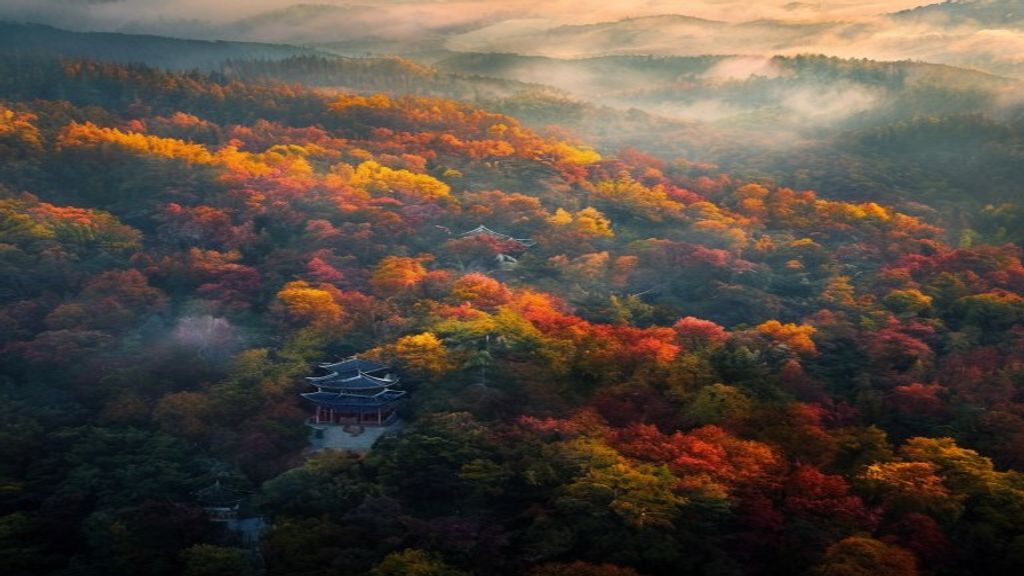
Why Korea in October Is an Absolute Must
If you've ever seen a photo of Korean mountains ablaze in crimson, gold, and burnt orange and thought that can't be real — it absolutely is. Korea's autumn foliage season, known locally as danpung (단풍), transforms the peninsula into one of the most visually spectacular destinations on Earth every October.
Unlike Japan's cherry blossom season, which can be hit-or-miss depending on temperatures, Korea's fall color show tends to be reliably dramatic. The combination of cold continental air sweeping down from Siberia and the peninsula's rugged mountain terrain creates the perfect conditions for intense leaf coloration. Koreans take this season seriously — many plan mountain hikes, temple visits, and weekend getaways months in advance.
Here's everything you need to know about where to go, when to go, and what to expect.
---
When Does Korean Autumn Foliage Peak?
The General Timeline
Korea's foliage season typically begins in late September in the northern mountains and high-altitude peaks, then cascades southward through October. By early-to-mid November, even the southern coastal areas and islands see their turn.
- Late September – Early October: High peaks like Seoraksan and Odaesan
- Mid-October: Mid-altitude national parks, Seoul's city parks
- Late October – Early November: Southern regions, Naejangsan, Jeju Island
What Affects the Colors?
The vibrancy of Korean autumn foliage depends on a cool, dry September followed by sharp temperature swings between day and night. Years with these conditions produce the most jaw-dropping reds and yellows. Maples (danpung namu) and ginkgo trees (eunhaeng namu) are the two biggest stars of the show — the former turning deep red and burgundy, the latter a luminous golden yellow.
---
Seoraksan National Park: The Crown Jewel of Korean Fall
If there's one place that defines Korean autumn foliage, it's Seoraksan (설악산) in Gangwon Province. This UNESCO Biosphere Reserve sits on the northeastern coast and is consistently ranked as the most beautiful national park in Korea.
What Makes Seoraksan Special
Seoraksan's granite peaks, deep gorges, and ancient Buddhist temples create a backdrop that makes the autumn colors feel almost surreal. The park's diverse elevation means you can watch the foliage unfold at different stages depending on how high you hike.
Top spots within Seoraksan:
- Heundeulbawi (Rocking Rock): A scenic hike with panoramic views of the colored forest below
- Biseondae: A flat rock by a river that perfectly reflects the surrounding autumn trees
- Osaek area: Known for its stunning valley colors and mineral spring water
- Gwongeumseong Fortress: Accessible by cable car for those who want views without the strenuous climb
Practical Tips for Seoraksan in October
- The peak foliage usually hits October 10–20 for the upper sections
- Weekends get extremely crowded — book accommodations in nearby Sokcho at least 6–8 weeks in advance
- The park entrance fee is very affordable (around 3,500 KRW for adults)
- Start early — gates open at sunrise and parking fills up by 7am on weekends
Naejangsan National Park: Korea's Maple Mountain
While Seoraksan wins the drama category, Naejangsan (내장산) in North Jeolla Province is widely considered to have the densest and most vivid maple foliage in all of Korea. Its name literally means "hidden interior mountain" — and the valley it conceals is like walking into a natural cathedral of red.
The Magic of Naejangsan
The park's layout is essentially a horseshoe-shaped valley lined with towering maple trees. When you walk the 1.6km path from the entrance to Naejangsa Temple, you're walking through a tunnel of autumn leaves that locals have been visiting for centuries. The 10th-century temple itself, surrounded by blazing maples, is one of the most photographed scenes in all of Korea.
Naejangsan typically peaks slightly later than Seoraksan — usually around late October to early November — making it an excellent second destination on a fall foliage itinerary.
Don't miss:
- The cable car ride to the ridge for a bird's-eye view of the valley
- The night foliage illumination events held in late October
- Yonggul Falls, particularly beautiful with autumn leaves framing the water
Seoul's Hidden Autumn Gems
You don't have to leave the capital to experience stunning autumn foliage. Seoul's urban forests, palace grounds, and mountain parks offer surprisingly beautiful fall scenery — and they're far less crowded than the national parks.
Bukhansan National Park
Sitting right on Seoul's northern edge, Bukhansan offers granite peaks and forested valleys that turn brilliant in October. The Ui-dong Valley trail is particularly popular for its maple trees lining the stream path.
Gyeongbokgung and Changdeokgung Palaces
Korea's Joseon Dynasty palaces are magnificent year-round, but autumn adds a layer of magic. The contrast of the palaces' traditional blue-gray tile roofs and vermillion wooden structures against golden ginkgo trees and red maples is extraordinary. Changdeokgung's Secret Garden (Huwon) is especially stunning — a 300-year-old royal garden designed to blend with nature, now ablaze with fall color.
> Many first-time visitors to Korea describe their autumn palace visit as a highlight that surpassed even their expectations — the combination of living history and natural beauty creates a completely unique atmosphere you won't find anywhere else in Asia.
Namsan (N Seoul Tower Area)
The forested slopes of Namsan Hill turn beautiful shades in mid-October. Walk the nature trails around the tower for city views framed by colorful leaves, or visit in the early morning for mist-draped forest scenes.
---
Odaesan and Gangwon Province's Hidden Valleys
Odaesan (오대산) is Seoraksan's quieter, more spiritual sibling. Home to Woljeongsa Temple, one of Korea's most celebrated Buddhist temples, the park features a famous fir tree forest path leading to the temple that becomes ethereal in autumn — the tall, straight firs flanking a carpet of fallen leaves.
The Gangwon Province town of Inje and the Baekdam Valley area also offer extraordinary foliage with far smaller crowds than Seoraksan. If you rent a car or hire a driver, a scenic loop through these valleys in October is one of the most memorable experiences Korea has to offer.
---
Jirisan National Park: Southern Grandeur
Jirisan (지리산) is Korea's largest national park and the country's first to be officially designated as such, back in 1967. Straddling three provinces in the south, it's a multi-day hiking destination with autumn colors that tend to peak in late October.
Why Jirisan Deserves More Attention
Unlike the more famous parks, Jirisan is vast enough that you can find genuine solitude even during peak season. The Piagol Valley within the park is legendary among Korean hikers — its maple trees are so dense and the reds so vivid that locals call it "a world of red."
The park also passes through villages where traditional Korean mountain culture is still alive, including foragers collecting wild herbs and chestnuts that are intrinsic to the region's cuisine.
---
The Cultural Significance of Danpung Season in Korea
For Koreans, the autumn foliage season isn't just tourism — it's a deeply embedded cultural ritual. The tradition of danpung nori (단풍놀이), or "leaf-playing," dates back centuries to when aristocrats, scholars, and later ordinary citizens would make pilgrimages to mountain temples and scenic valleys to appreciate the seasonal change.
Poetry written about autumn leaves appears throughout Korean classical literature and sijo (traditional three-line poetry). Even today, Koreans use weather apps specifically designed to track the progression of autumn colors nationwide — similar to Japan's famous cherry blossom forecast apps.
Many families combine danpung trips with visits to ancestral sites, given that the season overlaps with Chuseok (Korean harvest festival, late September/early October) and the general spirit of honoring nature and heritage.
Food also plays a major role. October is prime season for gamjatang (pork bone soup), ssambap (wrapped rice with mountain vegetables), roasted chestnuts sold by street vendors outside park entrances, and goguma (sweet potato) — all deeply associated with the cool crisp air of Korean autumn.
---
Practical Planning Guide for October Foliage Travel
Getting Around
- Express buses connect Seoul to Sokcho (for Seoraksan) in about 2.5–3 hours
- KTX trains reach Jeonju (near Naejangsan) in about 1.5 hours from Seoul
- Car rental is highly recommended for exploring Gangwon Province valleys at your own pace
- The Korea Tourism Organization website publishes annual foliage forecast maps starting in September
Where to Stay
- Sokcho: Best base for Seoraksan, with good seafood and easy park access
- Jeonju: A cultural city near Naejangsan with a famous hanok (traditional house) village — staying in a hanok guesthouse during fall is unforgettable
- Pyeongchang or Gangneung: Good bases for Odaesan exploration
Budget Overview
| Item | Approximate Cost | |------|------------------| | National park entry | 1,000–5,000 KRW | | Cable car (Naejangsan) | 10,000 KRW round trip | | Hanok guesthouse (per night) | 50,000–120,000 KRW | | Seoul to Sokcho express bus | 18,000–22,000 KRW | | Street food (chestnuts, sweet potato) | 2,000–5,000 KRW |
Packing Essentials
- Layered clothing — October mornings in Korean mountains can be near freezing
- Sturdy hiking shoes (trail conditions vary widely)
- A portable battery pack (camera and map apps drain quickly)
- Cash — many park vendors and smaller temples don't accept cards
Quick Comparison: Which Park Is Right for You?
| Park | Peak Timing | Best For | Crowds | |------|-------------|----------|--------| | Seoraksan | Oct 10–20 | Dramatic scenery, serious hikers | Very high | | Naejangsan | Oct 25 – Nov 5 | Dense maple color, temple visits | High | | Odaesan | Oct 8–18 | Spiritual atmosphere, quieter hike | Moderate | | Jirisan | Oct 20 – Nov 1 | Wilderness, multi-day trekking | Low-Moderate | | Seoul parks/palaces | Oct 15–25 | Urban convenience, culture | Moderate |
---
Final Thoughts
Korea's autumn foliage season in October is one of those travel experiences that consistently over-delivers. Whether you're threading through the maple tunnel at Naejangsan, watching mist lift off Seoraksan's granite peaks to reveal a canvas of red and gold, or sitting in the courtyard of a 1,000-year-old temple as leaves drift down around you — the memories tend to linger long after the season fades.
The best part? Unlike some of Asia's hyped seasonal travel moments, Korea's danpung season is still relatively undiscovered by international travelers. You'll share the trails mostly with Korean families, hiking clubs of retirees in matching gear, and young couples — which is its own kind of cultural experience.
If you're hungry to explore more Korean culture before or after your trip — from understanding temple etiquette to learning what to eat in each region — there's a wealth of cultural resources available through platforms dedicated to Korean travel and culture. Dive in, and let the season surprise you.