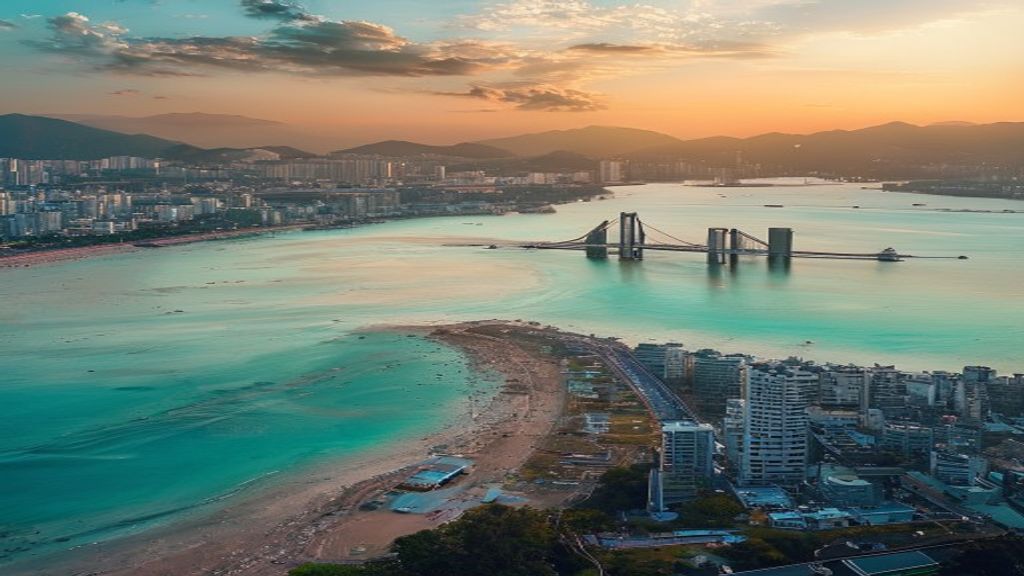
The Ultimate Busan Travel Guide: Must-Visit Places You Can't Miss
There's a moment most first-time visitors to Busan describe the same way: standing on the cliffs above the East Sea, watching fishing boats cut through steel-blue water while temple incense drifts past their shoulder. It hits them that this city — South Korea's second-largest, with nearly 3.4 million people — somehow manages to feel both relentlessly urban and deeply ancient at the same time.
Busan is not Seoul's little sibling. It is its own beast entirely: saltier, louder, more visceral, and arguably more Korean in the old-fashioned sense. Whether you're planning a week-long stay or a quick weekend escape from Seoul, this Busan travel guide covers every must-visit place worth your time.
---
Why Busan Belongs on Every Korea Itinerary
Most international travelers land in Seoul and never make it south. That's a mistake. Busan sits at the southeastern tip of the Korean Peninsula, where the Nakdong River meets the Korea Strait, and its geography shapes everything about it — the food, the attitude, and the architecture.
The city earned global recognition when it hosted the 2002 FIFA World Cup and the Busan International Film Festival (BIFF), which has run annually since 1996 and remains Asia's premier film event. But beyond the cultural prestige, Busan is simply a brilliant city to walk, eat, and explore.
Key reasons to visit:
- Stunning natural scenery — mountains, beaches, and coastline within the same city
- UNESCO-adjacent cultural heritage (Haeinsa Temple day trips, Buddhist traditions)
- Some of the best seafood in all of Asia
- Far fewer tourists than Seoul's main circuits
- An authentic look at Korean working-class history and culture
Gamcheon Culture Village: Busan's Open-Air Gallery
If you only have time for one Busan landmark, make it Gamcheon. Draped across a steep hillside in the Saha district, Gamcheon Culture Village is a labyrinth of pastel-painted houses, narrow staircases, and hand-painted murals that seem to defy gravity.
A History Rooted in Hardship
This neighborhood wasn't always a tourist destination. During the Korean War (1950–1953), Busan served as the final defensive perimeter — the so-called "Busan Perimeter" — and waves of refugees flooded the city. Gamcheon became a settlement for displaced families and followers of the Taegeukdo religious movement, who built homes tightly packed up the hillside.
In 2009, a government arts initiative transformed the village into an outdoor gallery, commissioning local and international artists to paint murals, install sculptures, and set up small craft studios. The neighborhood is still lived in — real families hang laundry between the painted walls — which gives it an authenticity that pure tourist attractions rarely achieve.
What to Do There
- Follow the self-guided map (available at the village entrance for around ₩2,000)
- Spot the iconic "Little Prince" rooftop statue overlooking the hillside
- Browse independent pottery and textile studios
- Stop at a hillside café for a view that rivals anything in Europe's cliff towns
---
Haeundae Beach: Korea's Most Famous Shoreline
Haeundae is Korea's Malibu — famous, occasionally overcrowded, and genuinely beautiful when you catch it right. The 1.5-kilometer white sand beach is packed wall-to-wall in July and August, when summer vacationers descend from across the country. Visit in May, September, or October and you'll find a far more relaxed atmosphere.
Beyond the Beach
The Haeundae district surrounding the beach has evolved into one of Busan's most cosmopolitan neighborhoods. The glass towers of Marine City shimmer across the water, BIFF Square (the walk of fame for Korea's film festival) is a short taxi ride away, and the Dongbaek Island peninsula juts into the sea just west of the beach, offering forested walking trails and sea views.
Don't miss:
- Haedong Yonggungsa Temple — a rare coastal Buddhist temple 15 minutes north of Haeundae by taxi. Perched directly on seaside cliffs, it's one of the most visually dramatic religious sites in Korea.
- Haeundae Traditional Market — a five-minute walk from the beach, selling everything from fresh bindaetteok (mung bean pancakes) to cheap beachwear.
Jagalchi Fish Market: The Soul of Busan
No Busan travel guide is complete without Jagalchi. This is the largest seafood market in South Korea, a place that operates with the kind of focused, pre-dawn intensity that reminds you food culture here is serious business.
What Makes Jagalchi Special
The market has operated since the Japanese colonial period (1910–1945), when Busan's port made it a hub for the fishing industry. Today, the iconic seven-story building and surrounding outdoor stalls house hundreds of vendors selling everything live — octopus, abalone, sea cucumber, blue crab, and fish you likely don't have a name for.
The women running the outdoor stalls — known informally as Jagalchi ajumma (market aunties) — are a cultural institution. They're famously sharp, funny, and will call you over with theatrical enthusiasm.
How to experience it properly: 1. Arrive between 5 AM and 8 AM to see the wholesale action 2. Pick a live fish or shellfish from a vendor downstairs 3. Pay a small processing fee and take it upstairs to one of the restaurants — they'll prepare it as hoe (Korean sashimi) or tang (stew) on the spot 4. Pair it with makgeolli (rice wine) and enjoy one of the most authentically Korean meals possible
---
Beomeosa Temple: A Thousand Years of Mountain Serenity
Built in 678 CE during the Silla Dynasty, Beomeosa Temple sits at the foot of Geumjeongsan Mountain in northern Busan. It's one of the most significant Buddhist temples in Korea and a functioning place of active worship — not a museum piece.
Visiting Beomeosa
The approach matters here. Most visitors take the subway to Beomeosa Station and then walk the forested trail up to the temple gate. The walk takes around 20–30 minutes through old-growth forest, and the transition from city noise to mountain stillness is part of the experience.
The temple complex includes several main halls, a Joseon-era stone lantern (National Treasure No. 11), and a famous daeungjeon (main worship hall) with elaborately painted wooden eaves.
Templestay programs are available here if you want to spend a night, participate in dawn meditation, and eat traditional monastic cuisine (barugongyang) — one of the most genuine cultural immersion experiences available in Korea.
---
Gwangalli Beach and the Diamond Bridge
If Haeundae is Busan's glamorous beach, Gwangalli is its cooler, younger sibling. The beach itself is slightly smaller, but the atmosphere is livelier at night — lined with bars, restaurants, and the kind of energy that makes you want to linger.
The Gwangan Bridge Light Show
The Gwangan Bridge (nicknamed the Diamond Bridge), spanning 7.4 kilometers across Suyeong Bay, lights up nightly with an LED display. From the beach, you can watch the entire show while eating grilled gopchang (intestines) or ttteokbokki from one of the beachside pojangmacha (street food tents).
Gwangalli is also a hub for Busan's independent coffee culture — dozens of specialty cafés have opened along the beachfront streets, many with direct sea views.
---
BIFF Square and Nampo-dong: Culture and Street Food
BIFF Square in the Nampo-dong district is the historic heart of Busan's film festival and a great place to spend an afternoon walking, eating, and people-watching.
Street Food You Need to Try Here
Nampo-dong is the birthplace of ssiat hotteok — a Korean pancake filled with seeds, honey, and brown sugar that became a nationwide sensation after vendors here popularized it. Queues at the original stalls can stretch 30 minutes, but they move fast.
Other Nampo-dong essentials:
- Gukje Market (International Market) — a sprawling indoor-outdoor market that's been operating since the Korean War era, selling everything from vintage clothing to Korean handicrafts
- Yongdusan Park and Busan Tower — a 10-minute walk uphill, offering panoramic city views for free (tower entry is cheap)
- Bosu-dong Book Street — a block of secondhand bookshops that has survived since the 1950s, beloved by locals and photographers alike
Taejongdae Park: Cliffs, Lighthouse, and Raw Coastline
Located on the southern tip of Yeongdo Island, Taejongdae is a natural park featuring some of the most dramatic coastal scenery in all of Korea. Sheer cliffs drop 200 feet into the sea, and on clear days you can see the Japanese island of Tsushima on the horizon.
A small tourist train (Danubi) circles the park if you'd rather not walk the full loop, but the 4-kilometer walking trail rewards those who take it — rocky beaches, a lighthouse dating to 1906, and lookout points that most visitors miss.
The park's name comes from King Taejong of the Joseon Dynasty, who reportedly visited and was so captivated he shot arrows into the sea from the clifftops.
---
Practical Tips for Visiting Busan
Getting to Busan
- KTX from Seoul Station to Busan Station: approximately 2 hours 40 minutes. Book in advance via Korail or the SRT app.
- Flights: Gimhae International Airport handles domestic and international routes.
Getting Around Busan
- Busan has a clean, efficient subway system with 4 main lines covering most tourist areas
- Kakao T (ride-hailing app) works well for taxis
- Buses are cheap but trickier for non-Korean readers
Best Time to Visit
- Spring (April–June): Mild weather, cherry blossoms along the Nakdong River
- Autumn (September–November): Comfortable temperatures, BIFF festival in October
- Avoid late July–August unless you specifically want the beach festival atmosphere (crowded and hot)
Budget Expectations
- Budget traveler: ₩60,000–80,000/day (guesthouse, street food, public transit)
- Mid-range: ₩150,000–250,000/day (hotel, restaurant meals, occasional taxi)
- Most attractions are free or under ₩5,000 entry
Final Thoughts: Why Busan Stays With You
Busan has a way of getting under your skin in a manner that polished tourist destinations rarely manage. It's a city that hasn't fully aestheticized itself for outside consumption — you'll find the same alleyways the fishermen use right next to a trendy café, the same temple bells ringing above the highway noise.
The must-visit places in this guide — Gamcheon, Jagalchi, Beomeosa, Taejongdae — are not just sights. Each one is a window into a specific layer of Korean history and daily life. Visit them in that spirit, and Busan will give you far more than photographs.
If you're planning your Korea trip and want to go deeper into the culture, food, and history behind these places, explore more Korean travel and culture resources to help you prepare. Understanding the context behind what you're seeing transforms a good trip into an unforgettable one.