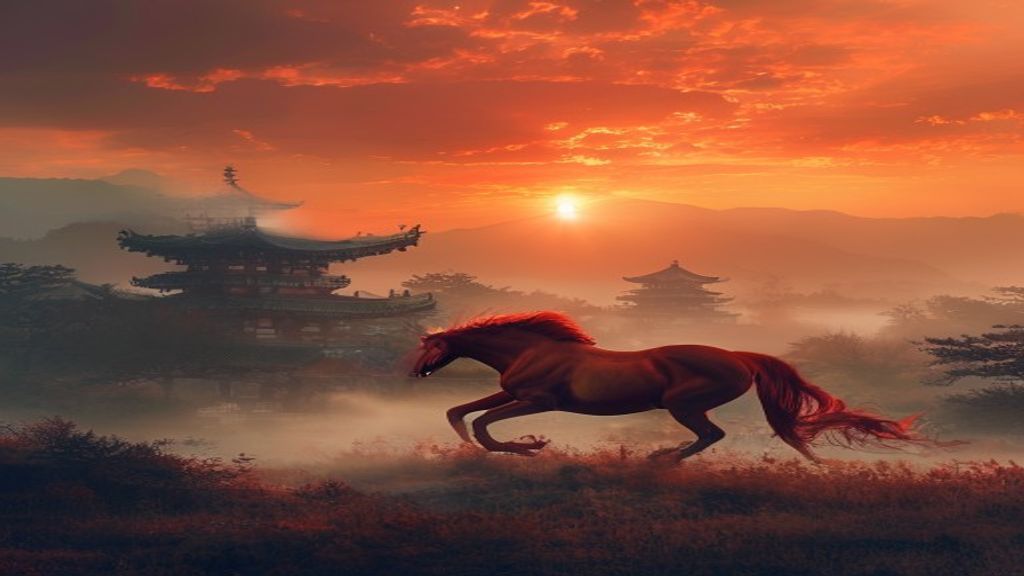
What Is the Year of the Red Horse 2026?
If you've ever lit incense at a Korean temple in early spring or watched families gather around a fortune teller's table during Seollal (Korean Lunar New Year), you already know that East Asian astrology is far more than superstition — it's a living cultural framework that shapes decisions, relationships, and ambitions for millions of people.
2026 is the Year of the Red Horse, known in Korean as 병오년 (Byeong-o nyeon). It begins on January 28, 2026 (the first day of the Lunar New Year) and runs through February 14, 2027. Understanding its energy isn't just for believers — it's a fascinating lens through which Korean and broader East Asian cultures interpret the rhythms of life.
The 60-Year Cycle and Why 2026 Is Special
The Korean and Chinese traditional calendar operates on a 60-year sexagenary cycle, combining 10 Heavenly Stems (천간, cheon-gan) and 12 Earthly Branches (지지, jiji). Each year gets a unique pairing. In 2026, the Heavenly Stem is 병 (Byeong), associated with the element Fire, and the Earthly Branch is 오 (O), representing the Horse.
Fire + Horse = the Red Fire Horse — arguably the most intense, dynamic, and polarizing sign in the entire 60-year cycle. The last Red Horse years were 1966 and 1906. In Korean cultural memory, 1966 is still discussed in hushed tones: birthrates dropped sharply because many families feared raising a Red Horse daughter, believing she would be too fierce and independent to marry well. That stigma has largely faded in modern Korea, but the year's raw, electric energy remains deeply respected.
---
The Energy of the Red Fire Horse: Core Themes
Before diving into specific life areas, it helps to understand the character of the Red Horse year itself.
- Fire (Byeong) in Korean cosmology represents brightness, passion, visibility, and sudden transformation. It's Yang fire — the sun, not a candle.
- Horse (O) symbolizes speed, freedom, ambition, charisma, and restlessness. The Horse charges forward without looking back.
- Bold action over careful planning
- Rapid change — both opportunities and crises
- Heightened emotions and dramatic turns in relationships
- Strong reward for those who move decisively, harsh penalties for hesitation
---
2026 Wealth Forecast: Bold Moves Win
The Fire Horse Economy
In traditional Korean saju philosophy, Fire years are connected to rapid movement of money — it flows in fast, but burns out fast too. The Red Horse amplifies this: 2026 is not a year for safe, conservative investing. Those who sit on the fence may find themselves overtaken by events.
Positive wealth indicators for 2026:
- Strong energy for entrepreneurship, new ventures, and side businesses
- Creative industries, technology, media, and entertainment are particularly favored — all Fire-element domains
- Networking pays off; the Horse's social magnetism means deals get made through relationships, not spreadsheets
- Real estate sees volatile but upward movement in Fire-influenced cycles
- Impulsive financial decisions are the year's biggest trap — the Horse charges; you must steer
- Legal disputes over money are more common in Horse years; get contracts in writing
- Avoid speculation fueled by FOMO; Red Horse energy makes bubbles feel like sure things
Which Zodiac Signs Benefit Most?
In Korean saju, your personal four pillars interact with the year's energy. Broadly speaking:
- Tiger, Dog, and Sheep signs form harmonious combinations with the Horse, making 2026 particularly prosperous for wealth
- Rat signs face the most friction (子午 충, ja-o chung — direct clash), requiring extra financial caution
- Dragon and Rabbit signs experience neutral-to-mixed outcomes depending on their full chart
2026 Career Forecast: Rise Fast or Get Left Behind
The Year of Visibility
One of the most consistent teachings in Korean traditional astrology about Fire Horse years: those who make themselves visible advance; those who stay hidden stagnate.
This is not the year to quietly hope your manager notices your work. The Red Horse rewards those who present ideas boldly, take on leadership, and accept public-facing roles even when it feels uncomfortable.
Career opportunities in 2026:
- Promotions and role changes happen faster than usual — be ready
- Fields like marketing, entertainment, sports, law, politics, and innovation-driven tech are especially energized
- Starting a new career path or launching a business carries stronger-than-average luck
- Public speaking, media appearances, and thought leadership opportunities arise unexpectedly
- Office politics intensify in Horse years — stay principled, don't get caught in power struggles
- The pace of change can lead to burnout; sustainable momentum matters more than sprint-then-crash cycles
- Workplace relationships need careful tending; Fire energy can turn a disagreement into a serious conflict
A Note on Saju Career Readings
In South Korea today, getting a 사주 (saju) reading before major career moves is completely mainstream — executives do it, young professionals do it, and it's offered in everything from app format to dedicated consultation centers in Insadong. The practice isn't about blind fate-following; most Koreans use it as a reflective framework, similar to how Westerners might use personality assessments like Myers-Briggs.
---
2026 Love & Relationships: Passion and Turbulence
The Most Romantic (and Volatile) Year in the Cycle
Ask any Korean fortune teller which year sees the most dramatic love stories — new romances, sudden breakups, unexpected marriages — and they'll likely say a Fire Horse year without hesitation.
The Horse is fundamentally a social, charismatic, freedom-loving animal. Fire adds intensity and passion. This combination means:
For singles:
- 2026 is one of the strongest years in the 12-year cycle for meeting a significant partner
- Romantic encounters happen quickly and feel fated — trust your instincts, but don't abandon judgment
- Social events, travel, and professional settings become unexpected meeting grounds
- The energy favors active seekers — online dating, blind dates (소개팅, sogaeting), and saying yes to invitations
- Established relationships are tested by the Horse's restlessness — boredom becomes dangerous
- Couples who inject novelty, adventure, and honest communication thrive
- This is an excellent year for engagement and marriage proposals — Fire years carry strong yang energy for new beginnings
- Affairs and temptations are also statistically more common in Horse years in traditional Korean belief; awareness is protection
The Red Horse Daughter Stigma — Then and Now
As mentioned earlier, the 1966 Red Horse year caused a documented birthrate drop in South Korea and parts of Japan and Taiwan. Families genuinely feared that a daughter born under the Red Fire Horse would be too independent, too fierce, too likely to overpower a husband and bring family misfortune.
Today's Korea has largely moved past this belief — and younger Koreans often reclaim the Red Horse identity with pride, seeing the sign's independence and fire as strengths rather than flaws. Several Korean cultural commentators have noted that Red Horse women born in 1966 have disproportionately appeared in leadership roles, creative fields, and public life — which, depending on your perspective, makes the old stigma look either ironic or simply wrong.
---
Health & Wellbeing in the Red Horse Year
Traditional Korean medicine (한의학, hanuihak) and astrology share deep roots. Fire-dominant years are associated with:
- Cardiovascular system — heart health, blood pressure, and circulatory issues need monitoring
- Stress-related conditions — the year's pace is exhausting; rest is not laziness in 2026, it's strategy
- Mental health — the emotional intensity of a Red Horse year can amplify anxiety; grounding practices matter
- Balance Fire with Water-element foods and activities (수, su): swimming, hydration, cooling foods
- Practice 명상 (myeongsang) — meditation — to counter the year's restless energy
- Regular health screenings, especially cardiac, are particularly recommended for those in their 40s and 50s
Lucky and Unlucky Elements for 2026
Colors, Numbers, and Directions
In Korean traditional culture, aligning your environment with favorable energies is a practical act, not just superstition. For the Red Horse year:
Lucky:
- Colors: Red, orange, purple (Fire colors); Blue and black (Water to balance Fire)
- Numbers: 2, 3, 7, 9
- Directions: South (Horse's cardinal direction), East
- Auspicious activities: Travel, starting businesses, creative projects, ceremonies
- Colors: White and grey (Metal weakens Fire; can bring conflict)
- Direction: North (direct opposition to Horse)
- Large financial transactions without due diligence
- Moving to new homes during the 삼재 (samjae) unlucky period for affected signs (check your individual chart)
How Koreans Prepare for a New Lunar Year
Seollal Rituals and Fortune-Seeking
The transition into a new lunar year in Korea is rich with ritual. As Byeong-o year 2026 approaches, expect to see:
- Charye (차례) — ancestral memorial rites performed on Seollal morning to honor forebears and seek their blessing for the year ahead
- Sebae (세배) — the deep bow to elders, followed by receiving wisdom (덕담, deokdam) — words of blessing tailored to the new year's energy
- Temple visits — Buddhist temples across Korea see massive turnover as worshippers pray for the year's favorable outcomes
- Saju and tarot consultations — bookings for professional saju readers spike dramatically in late January, both in-person and through Korean apps
- 토정비결 (Tojeong bigyeol) — a uniquely Korean fortune almanac dating to the Joseon Dynasty, still widely consulted at the start of each lunar year
---
Practical Takeaways: Making 2026 Work for You
Whether you approach Korean astrology as a believer, a cultural learner, or a curious skeptic, the Red Horse year's themes offer genuinely useful frameworks:
1. Act decisively — 2026 rewards initiative over caution in career and finance 2. Invest in relationships — the year's social energy is real; nurture your network 3. Protect your health proactively — don't let ambition outpace self-care 4. Expect change to accelerate — flexibility is your greatest asset 5. Get specific guidance — a proper saju reading considers your full birth date, time, and location, not just your zodiac animal; the year's energy interacts differently with every individual chart
---
Final Thoughts: Why the Red Horse Year Still Matters
There's a reason the Red Fire Horse year occupies such a prominent place in Korean cultural memory. It represents something primal: the tension between freedom and responsibility, passion and prudence, ambition and wisdom. In a culture that has historically prized collective harmony and measured progress, the Horse's wild energy is both exciting and unsettling.
As 2026 approaches, millions of Koreans — at home and in the diaspora — will consult their saju charts, visit temples, share deokdam with their elders, and set intentions for a year they know, instinctively, will not be quiet.
Whether you were born in a Horse year or not, whether you read your horoscope daily or never, the Year of the Red Horse invites everyone to ask: Am I charging toward what I want, or just running?
---
Interested in exploring Korean astrology, Seollal traditions, or saju readings more deeply? Look for Korean cultural centers, reputable saju apps with English interfaces, or Korean studies programs at universities near you — the tradition is rich, nuanced, and more accessible to international learners than ever before.
Frequently Asked Questions
What is the Year of the Red Horse 2026?
In Korean astrology, 2026 is Byeong-o, the Year of the Red Fire Horse. Byeong is yang Fire and O is the Horse, itself a Fire sign, so the year carries double yang Fire energy. It is associated with boldness, passion, movement, and fast change across wealth, career, and love.
Is 2026 a good year for wealth and career?
The Red Horse year favors decisive action over caution. Its double Fire energy rewards bold, well-timed moves and visible ambition, which can bring rapid career rises and financial opportunity. The same intensity punishes hesitation, so momentum and clear focus matter more than usual.
What does the Red Horse year mean for love and relationships?
Fire Horse energy amplifies passion and attraction, making 2026 an active year for romance, but it also heightens conflict. Couples with balanced charts often experience it as a breakthrough year, while relationships with hidden friction may see tensions surface and need honest attention.
How can I make the most of the Red Horse year?
Channel the year's Fire energy with intention: act on plans you have been postponing, but pair passion with grounding habits such as steady routines and rest. In love and work alike, courage combined with balance suits the Red Horse year best.