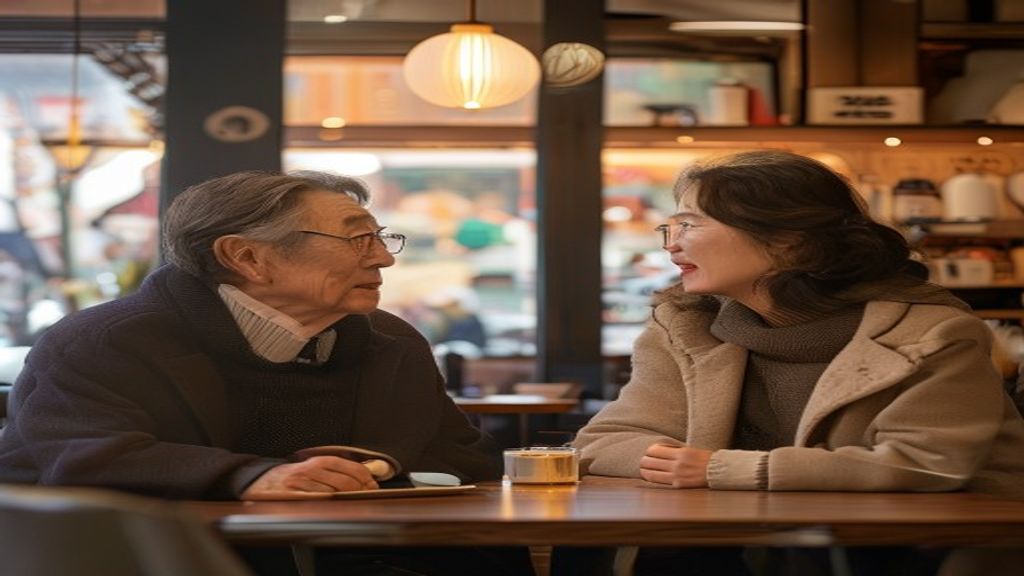
Why Korean Honorifics Feel Intimidating — and Why They Shouldn't
Imagine sitting down for your first Korean language lesson and discovering that the language has seven different speech levels. Not just formal and informal — seven. For most Western language learners, this can feel like hitting a wall before you've even started.
But here's the thing: the vast majority of those seven levels are either obsolete or rarely used in everyday life. In modern Korean, you'll primarily navigate two or three key registers, and once you understand the social logic behind them, the whole system starts to click.
Korean honorifics aren't just grammar rules — they're a window into Korean culture, values, and relationships. This guide will walk you through everything you need to know about formal and informal speech in Korean, why it exists, and exactly when to use it.
---
The Cultural Roots of Korean Speech Levels
Confucianism and the Hierarchy of Language
Korean honorifics — called 경어법 (gyeongeobbeop) or speech level system — are deeply rooted in Confucian philosophy, which spread through the Korean peninsula during the Goryeo and Joseon dynasties (roughly 918–1910 CE). Confucian social ethics placed enormous emphasis on hierarchical relationships: between ruler and subject, parent and child, elder and younger, teacher and student.
Language became the primary vehicle for expressing these relationships. Speaking to someone above you in the social hierarchy without the proper honorific forms wasn't just rude — it was a moral failure, a sign that you didn't understand your place in the social fabric.
From Dynasty to Modern Seoul
While Korea has modernized dramatically, the core logic of the honorific system has remained intact. What has changed is the flexibility with which people apply it. Younger Koreans, especially those in creative industries or startup culture, often adopt flatter communication styles. Yet even in the most casual Seoul office, you'll still hear employees switch to formal speech when addressing a senior colleague — sometimes mid-sentence.
---
The Seven Speech Levels: A Quick Overview
Korean technically has seven 존댓말 (jondaemal) — speech levels — but linguists and teachers alike agree that modern usage has consolidated around a smaller set. Here's a simplified breakdown:
| Speech Level | Korean Name | Usage | |---|---|---| | Formal Polite | 하십시오체 (hashipsioche) | Official settings, military, broadcasts | | Informal Polite | 해요체 (haeyoche) | Most everyday adult interaction | | Plain / Intimate | 해체 (haeche) | Close friends, children, diary writing | | Blunt | 해라체 (haerache) | Written instructions, children's books |
The two you'll use most as a learner — and the two most Koreans use daily — are 해요체 (haeyoche) and 해체 (haeche). Think of them as your "polite mode" and your "casual mode."
---
Formal Polite Speech: 해요체 (Haeyoche)
When to Use It
Haeyoche is the safe default for any adult interaction where you're not already on intimate terms with someone. Use it:
- When meeting someone for the first time
- With anyone older than you, even by just a year or two
- In professional or workplace settings
- With service staff (yes, Koreans use polite speech with waitstaff)
- In classrooms, with teachers, or with professors
How It Works Grammatically
Haeyoche is formed by taking the verb stem and adding -아요 / -어요 at the end. The vowel you use depends on vowel harmony rules:
- 가다 (to go) 가요
- 먹다 (to eat) 먹어요
- 하다 (to do) 해요
A Note on Sentence-Ending Particles
One thing that surprises learners is that formality in Korean isn't just about verb endings. Vocabulary choices, subject-marking particles, and even the way you refer to yourself and others all shift with the speech level. For instance, instead of saying 나 (na) for "I" in formal speech, you'd use 저 (jeo) — a more humble form.
---
Informal / Casual Speech: 해체 (Haeche)
When to Use It
Casual speech — also called 반말 (banmal), literally "half speech" — is reserved for situations where social distance has genuinely closed. You'll hear it:
- Between close friends of the same age
- From adults speaking to children
- Between siblings and family members (sometimes)
- In text messages between close peers
- In song lyrics, social media, and entertainment
How to Form Banmal
Banmal is essentially haeyoche with the -요 dropped:
- 가요 가
- 먹어요 먹어
- 해요 해
The Ritual of "Speaking on the Same Level"
In Korean culture, there's an interesting social ritual where two people of similar age who've just met might ask each other: "말 놓을까요?" (Mal noeulkkayo?) — roughly, "Should we drop the formal speech?"
This question is significant. It signals a desire to move from social acquaintance to genuine friendship. Accepting it means you're agreeing to a new level of closeness. Many Korean friendships have a clear "before" and "after" defined by this moment.
---
Honorific Vocabulary: It Goes Beyond Verb Endings
Respectful Nouns and Verbs
One layer of Korean honorifics that surprises many learners is the existence of entirely different vocabulary for polite contexts. It's not just about how you conjugate — it's about which word you choose in the first place.
Some key examples:
| Meaning | Casual Word | Honorific Word | |---|---|---| | To eat | 먹다 (meokda) | 드시다 (deusida) / 잡수시다 (jabsusida) | | To sleep | 자다 (jada) | 주무시다 (jumusida) | | To be (exist) | 있다 (itda) | 계시다 (gyesida) | | Name | 이름 (ireum) | 성함 (seongham) | | Age | 나이 (nai) | 연세 (yeonse) | | House | 집 (jip) | 댁 (daek) |
Using the casual word for "eat" when speaking to your Korean host's grandmother would be a noticeable faux pas — the equivalent of being inexplicably brusque in an otherwise polite conversation.
The Humble Form: Lowering Yourself
Korean honorifics work in two directions. You can elevate the person you're speaking to — that's standard honorific use. But you can also lower yourself, using humble forms to show deference. This is why Koreans say 저 instead of 나 in formal contexts, or use 드리다 (deurida) instead of 주다 (juda) when giving something to a superior.
---
Navigating Honorifics in Modern Korean Society
The Workplace: Still Very Formal
If you've watched Korean dramas set in offices — and who hasn't — you'll notice that coworkers can be friends outside of work but still speak formally in the office. This is largely still accurate, particularly in traditional industries like finance, law, and manufacturing.
In startup culture and entertainment, informality has crept in, but even there, new employees typically default to formal speech until explicitly told otherwise.
Age and the Korean Age System
It's worth noting that Korean age calculation — which until recently often made Koreans one or two years older by international standards — directly affects honorific use. When Koreans meet for the first time, asking age (politely, of course) is common precisely because it determines how to speak to each other going forward.
Since South Korea officially moved to the international age system in 2023, there's been interesting social discussion about whether and how this affects social dynamics. The honorific logic, however, remains unchanged.
K-Dramas and K-Pop as Learning Tools
One of the unexpected benefits of the Korean Wave (한류, Hallyu) is how it's introduced millions of international fans to the feel — if not always the exact mechanics — of Korean speech levels. Pay attention to how characters in dramas switch between formal and informal speech, or how a senior character reacts when a junior accidentally uses banmal. These moments carry real cultural weight.
---
Common Mistakes Foreigners Make with Korean Honorifics
Even advanced learners trip over honorifics. Here are the most frequent errors:
- Using banmal too early: This is the big one. Dropping formality before the relationship warrants it reads as presumptuous or rude, not friendly.
- Inconsistent speech levels: Mixing haeyoche and banmal mid-conversation confuses and unsettles Korean speakers.
- Forgetting humble vocabulary: Using the polite verb ending but the casual noun (e.g., saying 이름 instead of 성함 to a senior) creates an odd mismatch.
- Assuming age equals seniority: In professional contexts, title and position can matter as much as — or more than — age. A younger manager may still receive elevated speech from older subordinates.
- Overusing the most formal register: Using 하십시오체 (the stiffest formal level) in casual daily life sounds unnatural, like speaking in press release language.
Quick Reference: Choosing the Right Speech Level
Use this mental checklist when you're unsure:
1. Is this person a stranger or new acquaintance? Use haeyoche (해요체) 2. Is this person older or senior in rank? Use haeyoche, consider honorific vocabulary 3. Is this a close friend of the same age? Banmal (해체) is fine 4. Is this an official or highly formal setting? Consider 하십시오체 5. Are you speaking to a child? Banmal is standard 6. Has the person invited you to drop formality? Then — and only then — feel free to switch
---
Tips for Actually Practicing Korean Honorifics
Understanding the rules is one thing. Using them naturally under social pressure is another. Here's how to build real fluency:
- Watch Korean content with subtitles and actively note when speech levels change and why
- Start every conversation in haeyoche — it's polite, safe, and widely appreciated by Korean speakers
- Practice set phrases in both levels: greetings, thank-yous, apologies
- Find a language exchange partner and ask them to correct your speech level usage in real time
- Read webtoons or manhwa — the dialogue often explicitly contrasts speech levels between characters of different ages and relationships
- Don't be afraid to ask: Koreans are generally patient and delighted when foreigners make the effort to use honorifics correctly
Final Thoughts: Honorifics as Cultural Fluency
Mastering Korean honorifics isn't just about passing a language test or avoiding embarrassment — it's about genuinely connecting with Korean culture and the people in it. When you choose the right speech level, you're signaling that you understand and respect the relationships and values that shape how Koreans see the world.
Is it a steep learning curve? Yes. But every time you correctly switch to formal speech when meeting an older person, or warm a friendship by dropping the -요 when invited, you're not just speaking Korean — you're doing Korean culture.
If you're serious about deepening your understanding of the Korean language and the culture behind it, explore resources on Korean Confucian history, K-drama analysis guides, and community language exchange platforms. The honorific system is just the beginning of a fascinating linguistic and cultural journey.