Everything You Need to Know About Korean Drinking Culture and Soju Etiquette
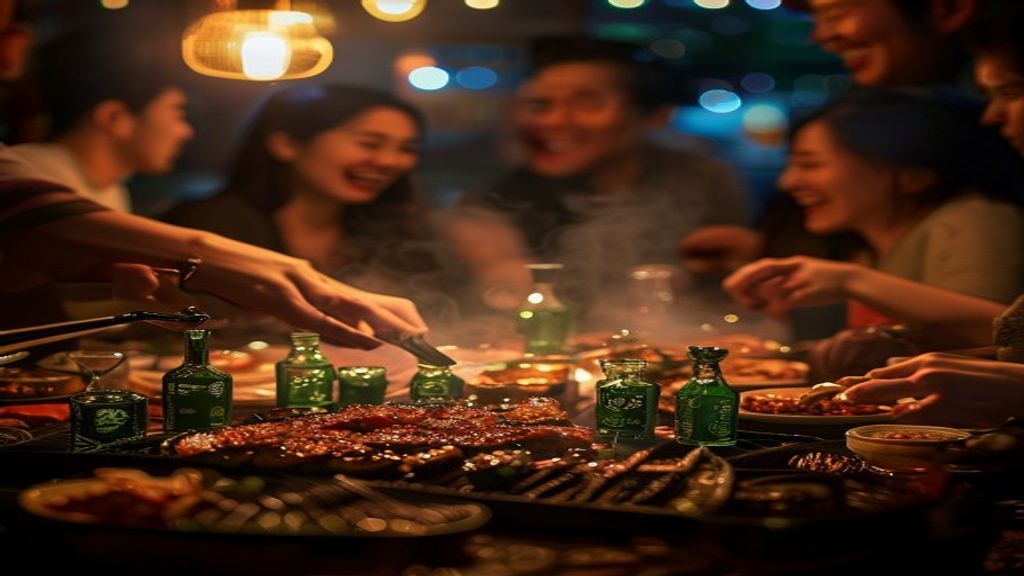
Imagine this: you're sitting at a low table in a bustling Korean restaurant, surrounded by sizzling meat, steaming bowls of jjigae, and small green bottles everywhere. Someone across the table picks up a bottle of soju, looks at you with a smile, and gestures for their glass. You have absolutely no idea what to do next.
If that scenario sounds familiar — or like something you want to be prepared for — you're in the right place. Korean drinking culture runs deep, and soju etiquette isn't just a set of polite suggestions. These customs carry centuries of social meaning, and getting them right can make or break how you're perceived in Korean social settings.
Let's break it all down.
---
What Is Soju and Why Does It Matter Culturally?
Soju (소주) is South Korea's most iconic alcoholic beverage. Traditionally distilled from rice, modern soju is typically made from starches like sweet potato or tapioca. It's clear, slightly sweet, and packs an alcohol content usually ranging from 16% to 25% ABV — though premium artisan varieties can go much higher.
Here's the number that matters: soju is consistently one of the best-selling spirits in the world. Jinro, South Korea's most recognized soju brand, has held the title of the world's best-selling spirit for over two decades. That's not a niche cultural product — that's a global phenomenon rooted in everyday Korean life.
But soju isn't just about drinking. It's about belonging. It's the drink shared after a long workweek, at family gatherings, on first dates, and during late-night conversations with colleagues. Understanding soju is understanding how Koreans connect with each other.
---
A Brief History of Korean Drinking Culture
Korea's relationship with alcohol stretches back over a thousand years. During the Goryeo Dynasty (918–1392), rice wine and fermented grain spirits were common across all social classes. Traditional Korean alcohol — known collectively as makgeolli (rice wine) and cheongju (refined rice liquor) — formed the backbone of ceremonial and everyday drinking.
Soju as we know it today emerged during the Joseon Dynasty (1392–1897), influenced by distillation techniques introduced from the Mongols via the Yuan Dynasty. The city of Andong in North Gyeongsang Province became famous for producing Andong soju, a high-proof, traditionally distilled spirit that is still revered as a premium product today.
During the Korean War and post-war industrialization, grain shortages led the government to ban traditional rice-based distillation. Manufacturers switched to diluted ethanol, and the lighter, more affordable soju we see in green bottles today was born. Far from being a degradation, this accessible version became the soul of Korean social drinking culture.
---
The Core Rules of Soju Etiquette
This is the heart of it. Whether you're at a Korean barbecue spot in Seoul, a pojangmacha (street tent bar) in Busan, or a Korean restaurant abroad, these rules govern the table.
Always Pour for Others, Never for Yourself
This is rule number one and probably the most important. In Korean drinking culture, you pour for others, and others pour for you. Pouring your own drink is considered a social faux pas — it signals that no one at the table is paying attention to you, or worse, that you don't understand the communal nature of the gathering.
Keep an eye on glasses around you. When someone's glass is getting low, offer to refill it before they have to ask.
Use Two Hands When Pouring or Receiving
Respect in Korean culture is often expressed through physical gestures, and two-handed giving is one of the most universal. When pouring soju for someone else, hold the bottle with both hands, or support your pouring arm at the elbow or wrist with your other hand. When receiving a pour, hold your glass with both hands or place one hand beneath it.
This rule applies especially when there's a significant age gap. Showing deference to elders through two-handed gestures is a cornerstone of Korean Confucian social values.
Turn Away When Drinking in Front of Elders
You might notice Koreans subtly turning their head to the side when taking a shot around older people at the table. This is a sign of respect toward seniors — a direct inheritance of Confucian hierarchy where openly drinking in front of elders without some gesture of modesty is considered impolite.
You don't need to hide your drink, but a slight turn of the body or head when you sip goes a long way in earning respect.
Don't Let an Empty Glass Sit Unfilled
An empty glass is a waiting glass. In Korean drinking settings, an unfilled glass on the table can feel like neglect. If you notice someone has been sitting with an empty glass for a while, it's a natural and kind gesture to offer a pour.
Conversely, if you don't want more to drink, leave a little liquid in your glass. A full glass signals that you're still working on your drink; an empty glass is an open invitation.
Accept the First Drink When Offered
When someone pours you a drink — especially a senior or a host — it's generally expected that you accept it, at least for the first round. Refusing the opening pour without a reason (like a health issue or personal abstinence) can come across as rejecting the social bond being offered.
If you don't drink alcohol, a polite explanation is always respected. Korean culture has become increasingly accommodating of non-drinkers, especially in younger generations.
---
The Art of the Geonbae: Toasting in Korea
The Korean equivalent of "cheers" is geonbae (건배), which literally means "empty glass." When someone raises their glass and says geonbae, it's a signal to clink glasses and drink.
A few toasting tips:
- Make eye contact when clinking glasses — avoiding eye contact during a toast is considered rude in many Korean settings.
- Lower your glass slightly when toasting with someone older or more senior than you. This is another Confucian gesture of respect.
- You don't have to drain your glass on every geonbae, though at the opening of a drinking session it's common to finish the shot.
- Other common expressions include "위하여" (wihayeo), meaning "for the sake of," often used before specific toasts like "for friendship" or "for success."
Anju: The Essential Drinking Food Culture
In Korean culture, drinking without eating is practically unthinkable. Anju (안주) refers to food eaten alongside alcohol, and it's not an afterthought — it's a defining part of the experience.
Common anju dishes include:
- Samgyeopsal (삼겹살) — grilled pork belly, perhaps the most beloved barbecue anju
- Ojingeo (오징어) — dried or spicy squid
- Japchae (잡채) — glass noodles with vegetables and meat
- Chimaek — fried chicken paired with beer, so iconic it has its own cultural term
- Dubu kimchi (두부김치) — tofu with stir-fried kimchi
---
The Hoesik: Korean Work Drinking Culture
No discussion of Korean drinking culture is complete without addressing hoesik (회식) — the company or group dining and drinking event that has long been a fixture of Korean workplace culture.
Traditionally, hoesik was nearly mandatory. Missing one without a strong excuse could signal you weren't a team player. These events often included multiple rounds at different venues — dinner, then a bar, sometimes a norebang (karaoke room) — and could stretch late into the night.
In recent years, younger Koreans and progressive companies have pushed back on obligatory hoesik culture, advocating for work-life balance and voluntary participation. Many companies have shifted to daytime coffee meetups or optional dinners. It's a cultural evolution happening in real time.
But hoesik still exists and still matters in many sectors. If you're working in Korea or attending a professional event, understanding that drinking together builds trust in Korean professional settings is a valuable piece of cultural literacy.
---
Bomb Shots and Drinking Games: The Fun Side
Beyond the formal rules, Korean drinking culture has a genuinely playful, game-heavy side that tends to come out once everyone is relaxed.
Somaek (소맥)
One of the most popular drinking combinations in Korea is somaek — a mix of soju and beer. The ratio debate (how much soju to beer) is a topic of genuine enthusiasm. Watch for the classic "golden ratio" debate at any Korean bar.
Titanic Game
A shot glass is floated in a beer glass, and players take turns pouring soju into the shot glass. Whoever sinks the titanic has to drink. Simple, tense, and surprisingly fun.
Baskin Robbins 31
Players count from 1, saying one to three numbers at a time. Whoever is forced to say "31" drinks. This number game is a Korean drinking staple that requires zero equipment and always creates chaos.
Nunchi Game (눈치 게임)
Everyone must count to the total number of players, but no one can speak at the same time as another. Anyone who speaks simultaneously must drink. It sounds simple until everyone is a few shots in.
---
Modern Shifts in Korean Drinking Culture
Korea's drinking culture is not static. The country has seen meaningful changes in recent years:
- Sober socializing is growing in popularity, especially among Gen Z Koreans who identify as "alcohol-free" (비음주자).
- Low-alcohol and zero-alcohol soju alternatives have entered the market, driven by health consciousness.
- Women's participation in drinking culture has become far more normalized, though gender dynamics in older-generation settings can still reflect traditional expectations.
- Craft spirits and cocktail culture are booming in cities like Seoul's Itaewon and Hongdae neighborhoods, attracting younger Koreans who want more than a green bottle on the table.
---
What to Do If You Don't Drink Alcohol
Don't worry — you won't be ostracized. Korean social culture has grown significantly more inclusive of non-drinkers, and there are graceful ways to navigate a soju-heavy gathering without drinking.
- Be upfront and polite. A simple "저는 술을 못 마셔요" (I can't drink alcohol) is understood and respected.
- Hold a glass of juice or water during toasts — the gesture of participation matters more than the liquid.
- Engage enthusiastically with the food and conversation. Anju and talk are the real heart of the gathering; alcohol is just the vehicle.
- Don't make a big deal of it. The more naturally you handle it, the more comfortable everyone else will be.
Final Thoughts: Drinking as a Cultural Gateway
Korean drinking culture is, at its core, about human connection. The rules of soju etiquette — pouring for others, using two hands, turning away out of respect — aren't arbitrary formalities. They're expressions of care, hierarchy, and belonging that have evolved over centuries.
Whether you're planning a trip to Seoul, building friendships with Korean colleagues, or just want to impress at your local Korean restaurant, understanding these customs signals something powerful: that you respect Korean culture enough to learn how it actually works.
And honestly? Once you've shared a round of somaek over samgyeopsal with good company, you'll understand why Koreans have been perfecting this ritual for generations.
---
Want to go deeper into Korean culture? Explore guides on makgeolli traditions, norebang etiquette, Korean table manners, and the fascinating world of Korean street food culture. There's a whole world of cultural nuance waiting — and it pairs beautifully with a cold glass of soju.